Mission Prometheus / A manifesto
Returnthe fire.Share the power.
Technological power should belong to the people who depend on it.

01 — The conviction
Technology shapes our lives.
Who gets to shape it?
Mission Prometheus takes a stand against the concentration of technological power embodied by Big Tech. Much of the digital economy rests on infrastructures people depend on without being able to set their rules, and on models that draw their value from users’ data, work and attention. The problem is not only what is extracted: it is the asymmetry of power that makes this extraction possible.
It calls for a different distribution of power. People should be able to understand their tools, decide what they entrust to them, leave them, challenge their uses and take part in how they are governed. This power must work in practice, without anyone needing to be an expert.
Between uncritical adoption and outright rejection, we defend a third path: technology can be powerful without its power being concentrated in the hands of those who own it.
Prometheus stands for sharing the fire and the ability to use it. The mission is to prevent that power from being captured again, including by the institutions we build ourselves.
02 — A foundational boundary
Protecting a work
is not permission to use it.
What we entrust to a tool should never silently become material for something else. A work entrusted for protection must never automatically feed search, training or commercial use. Each purpose needs a separate, informed choice.
A principle for the architecture we want to build.
Consented collections.
Any shared collection of works must begin with voluntary participation for a stated purpose. An agreement to preserve a work does not cover indexing, model training or a partner’s use.
Read the note on consent03 — Principles and commitments
A compass for what we build.
Four principles.
Ten commitments.
Make technology accessible.
Access depends on cost, usability, learning and understanding.
- 01Make access easier without turning it into a dependence.
- 02Shape priorities with artists and their real practices.
Keep power in people’s hands.
Choose what is private, shared, exported or deleted.
- 03Make consent specific, understandable, traceable and revocable.
- 04Allow usable exports of data, evidence, metadata and rights information.
Make technology accountable.
Make data use and its consequences understandable.
- 05Explain what happens to works, data, references and choices.
- 06Support human intention in research, organisation and creation.
- 07State the limits of what can be proven, protected, detected or guaranteed.
Give people the means to defend themselves.
Document origins, preserve evidence and contest abuses.
- 08No model training on protected works without explicit consent.
- 09Keep protection separate from search, indexing, recommendation and other uses.
- 10Develop standards that other people and tools can adopt, verify and audit.
Share
Our reason to exist
We exist so that technology expands everyone’s ability to understand, create and act, while keeping the power to choose.
These principles are the reason for this project. They must shape our tools, our economy and our governance.
 04 — Aestelier / The first expression
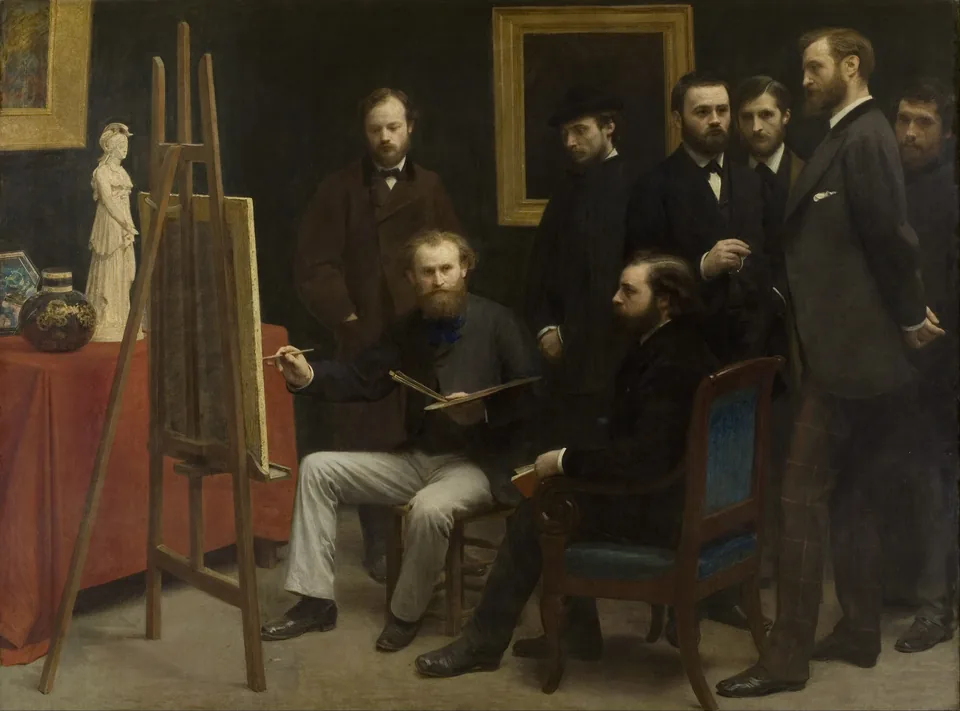
Technology amplifies.
Artists decide.
Aestelier is the first expression of Mission Prometheus, in the field where the tension between human work, data extraction and technological power is most tangible: creation. A work can circulate, lose its attribution or be used without its creator having a say.
Aestelier explores tools that let artists benefit from powerful technology without giving up control of their work, their data or their choices. Its role is not to decide for artists, but to expand what they can create, understand and protect. Today, the project is listening to artists’ reference practices.

05 — The long view
Rules that can live
beyond Aestelier.
This mission should be visible in the formats, the economics and the decisions behind the tools. These are the foundations we want to work towards.
Open, interoperable standards. Protected data.
Work towards open, portable and interoperable formats and protocols for provenance, permissions and exports, so that they work beyond Aestelier. Private works and sensitive information should remain under their creators’ control.
An economy that serves the mission.
Research, security, infrastructure, legal work and support need lasting resources. Revenue should fund independence and protection, with professional and institutional uses contributing to fair access for individual artists. Advertising built on extraction has no place in it.
Aestelier must be able to refuse a source of revenue or a partnership that conflicts with the mission.
A mission that can resist capture.
The mission must withstand the interests of the founder, management, investors, commercial partners or any actor with disproportionate power over the organisation. Its safeguards: public consent rules, documented decisions, auditability, a right to leave and standards usable outside Aestelier.
Over time, artists and the people affected by the tools should take part in their governance.
What we refuse
Hidden training. Forced consent. Undisclosed reuse. Opaque data sales. Engineered dependence.
These boundaries must apply to Aestelier itself.The next step / A conversation
What should technology
leave in your hands?
A habit, a difficulty, a boundary you care about. Your experience can help shape the questions Aestelier asks.
contact@guillaumeschneider.frA message to Guillaume Schneider. No account or portfolio needed.